24 Jul 2026
Tracing the Evolution of Haptic Feedback Integration in Portable Gaming Devices and Its Impact on Tactile User Experiences
Early Foundations in Portable Gaming Hardware
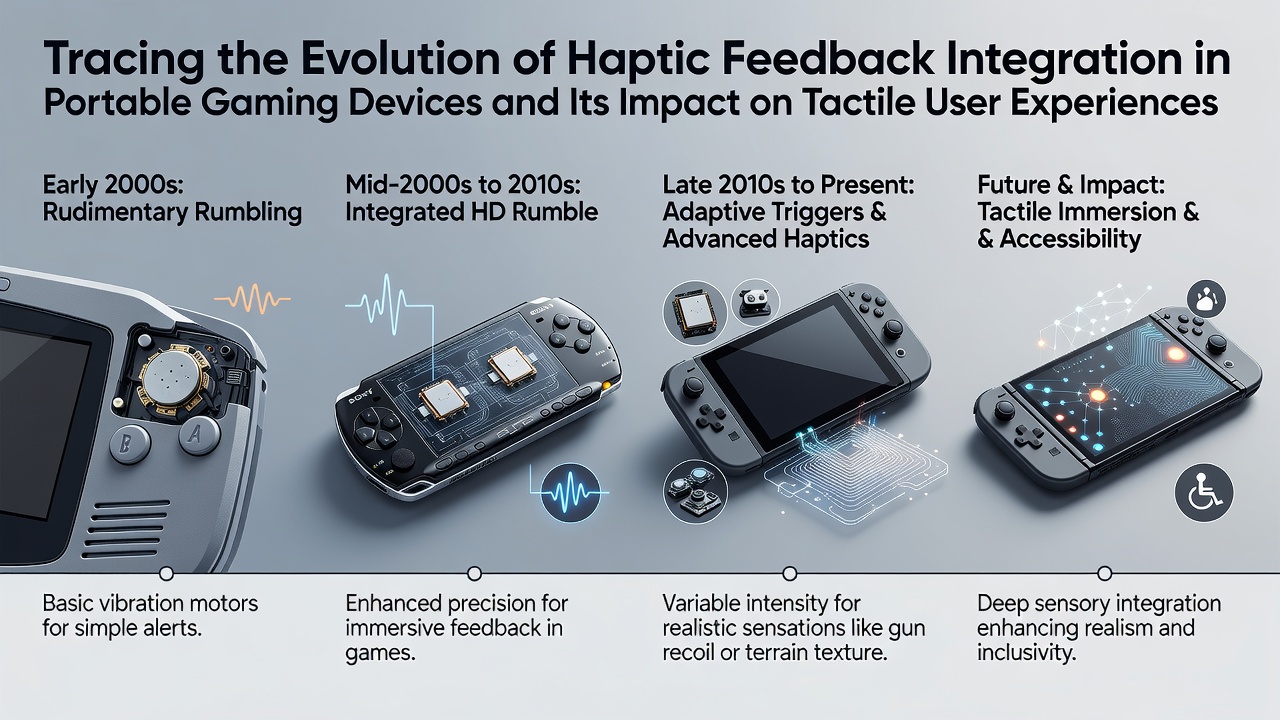
Portable gaming devices began incorporating basic vibration motors in the late 1980s and early 1990s, with systems such as the Nintendo Game Boy using simple rumble effects to signal events like collisions or power-ups while the core gameplay remained visual and auditory. Researchers documented these initial implementations in technical papers that tracked how limited actuator technology created binary on-off feedback rather than nuanced sensations. Data from industry archives shows that by the mid-1990s several handheld models from Sega and Sony added similar motors yet faced constraints from battery life and component size that restricted intensity levels.
Engineers experimented with eccentric rotating mass motors during this period because those components proved reliable across temperature variations common in portable use. Studies from electronics manufacturers revealed that users adapted quickly to the coarse feedback patterns even though the sensations lacked directional information or variable strength.
Transition to Linear Resonant Actuators and HD Rumble
Linear resonant actuators entered portable designs around 2010 when component costs declined and power efficiency improved. The Nintendo 3DS introduced adjustable vibration profiles that responded to in-game contexts such as terrain changes in racing titles. Observers noted that these upgrades allowed developers to map specific events to distinct pulse patterns rather than uniform rumbling. Figures from component suppliers indicate that adoption rates climbed steadily through 2015 as multiple manufacturers integrated similar hardware into Android-based handhelds.
Nintendo's Switch console launched in 2017 with HD Rumble technology that employed multiple actuators per Joy-Con controller to simulate textures and object interactions. Independent tests conducted by university engineering departments demonstrated measurable improvements in user accuracy during puzzle sequences that relied on tactile cues. The system generated localized sensations across the controller surface while maintaining portability constraints.
Mobile Phones and Cross-Platform Haptic Standards
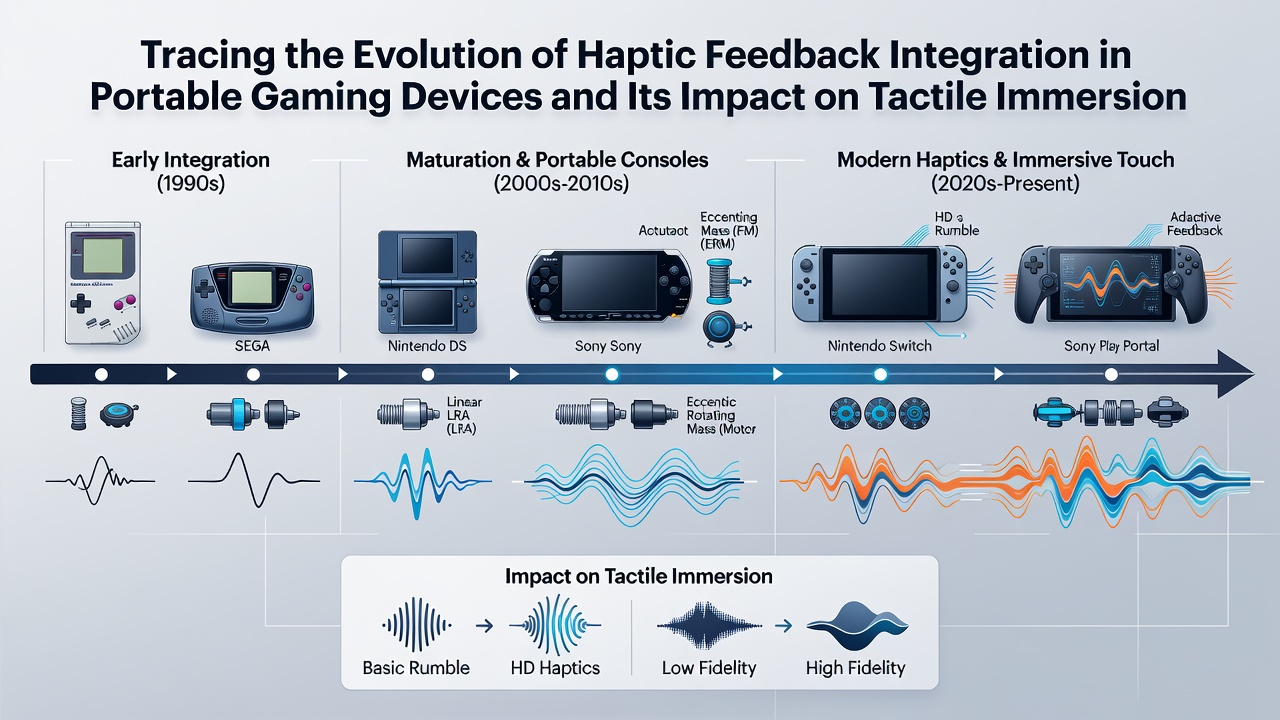
Smartphone manufacturers accelerated haptic refinement after 2015 when Apple introduced the Taptic Engine in iPhone models and Android vendors followed with comparable linear motors. Game developers gained access to standardized APIs that allowed consistent feedback across devices. Reports compiled by the Entertainment Software Association in the United States tracked rising integration rates in mobile titles between 2018 and 2023 as touchscreens combined visual input with precise vibration layers.
European research consortia examined synchronization challenges when haptics operated alongside wireless controllers and found that latency reductions below 20 milliseconds produced more coherent tactile experiences. By July 2026 several portable gaming handhelds incorporated adaptive algorithms that adjusted intensity based on grip pressure sensors and ambient noise levels detected through device microphones.
Measured Effects on Player Interaction and Retention
Academic studies published in human-computer interaction journals quantified how refined haptic feedback influenced session duration and error rates during gameplay. One analysis of Steam Deck users showed that titles utilizing directional haptics recorded higher completion percentages compared with versions limited to basic vibration. Data collected across multiple device ecosystems indicated that players maintained steadier input patterns when tactile signals reinforced on-screen events.
Industry organizations in Australia and Canada compiled regional surveys that linked improved tactile granularity to reduced physical strain during extended play sessions. Engineers refined waveform libraries to match common game mechanics such as weapon recoil or environmental resistance while preserving battery performance.
Conclusion
Hardware evolution from basic eccentric motors to multi-actuator arrays with software-driven waveforms has expanded the range of tactile information available on portable devices. Research institutions continue to document correlations between haptic fidelity and measurable aspects of user performance across genres. Component advancements scheduled for late 2026 are expected to introduce higher-resolution surface haptics that further integrate touch and motion data within compact form factors.