3 Jun 2026
The Role of Artificial Intelligence in Personalizing Game Recommendations Within Multi-Provider Casino Aggregators
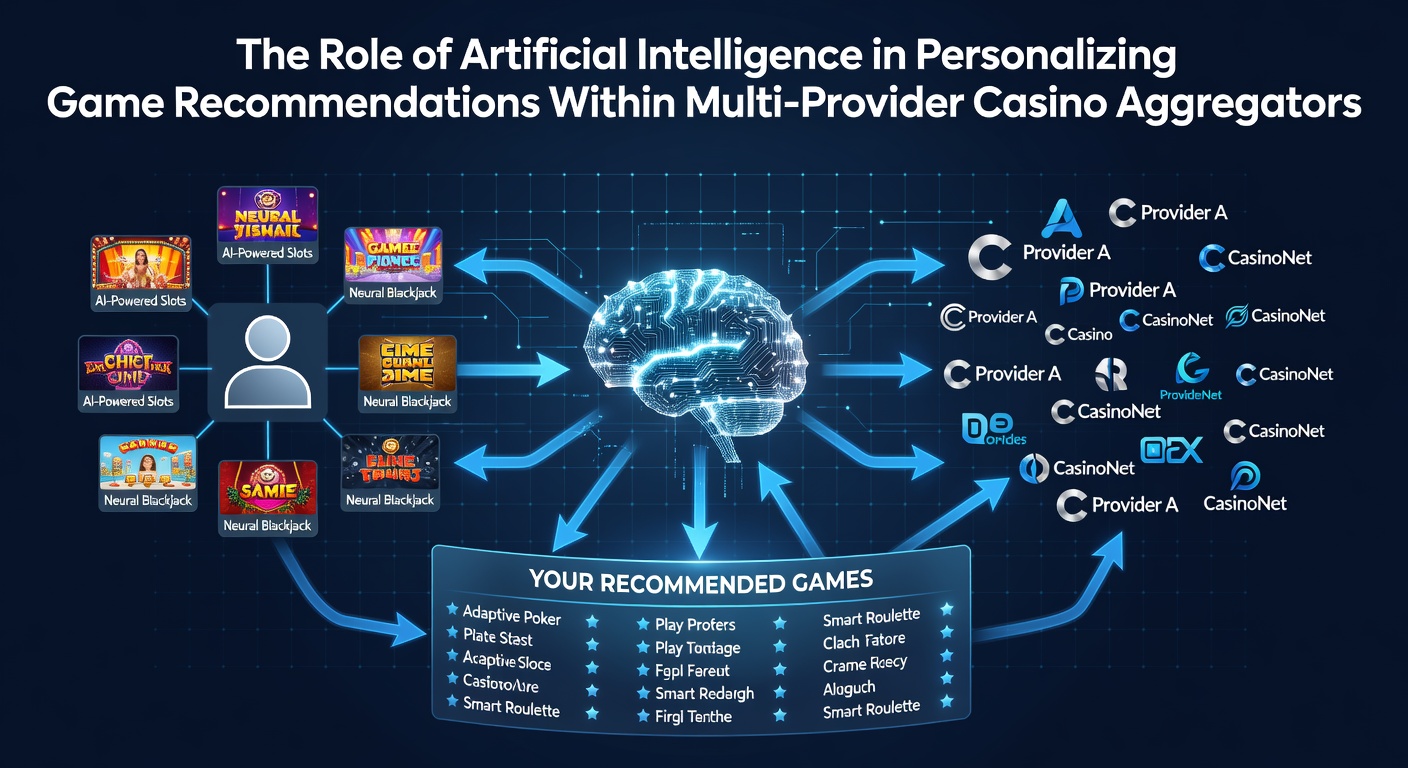
Multi-provider casino aggregators compile game libraries from dozens of independent studios into unified platforms, and artificial intelligence now drives the recommendation engines that surface specific titles to individual users based on behavioral patterns. These systems process inputs such as session duration, wager sizes, and preferred volatility levels to generate tailored suggestions that update in real time, while the underlying data flows through secure pipelines that comply with regional privacy regulations.
Data Processing Foundations in Aggregator Environments
Algorithms examine historical interactions across thousands of game entries supplied by separate providers, identifying clusters of similar player profiles through collaborative filtering techniques and neural network models. Researchers at institutions including the University of Nevada Reno have documented how these models reduce the time users spend browsing by mapping explicit choices like bonus round frequency against implicit signals such as idle periods between spins. The result appears in ranked lists that adapt after each completed round, drawing from aggregated provider catalogs without requiring manual curation by platform operators.
Integration occurs through standardized APIs that feed anonymized telemetry into centralized AI repositories, allowing the same recommendation logic to operate across desktop, mobile, and tablet interfaces simultaneously. Observers note that this architecture supports rapid incorporation of new game releases from additional studios, because the models retrain on fresh metadata within hours rather than days. In June 2026 several major aggregators expanded their provider networks by twelve studios on average, and the AI layers adjusted suggestion outputs within the same deployment window to maintain continuity for returning users.
Cross-Provider Matching and Dynamic Ranking
Once data enters the model, similarity scores compare a given account against peer groups that share comparable engagement histories, then surface titles from any connected provider that align with those patterns. This cross-catalog matching prevents users from seeing only games from a single studio and instead presents options that may originate from competing suppliers, all while respecting licensing boundaries and regional availability rules. Those who have studied aggregator performance data indicate that recommendation click-through rates increase when the system weights recent activity more heavily than older sessions, a weighting scheme updated weekly through reinforcement learning loops.

Dynamic ranking also incorporates external factors such as time of day and device type, because certain game mechanics perform differently on smaller screens versus larger displays. The models therefore adjust volatility preferences accordingly, presenting lower-volatility options during shorter mobile sessions and higher-volatility selections during extended desktop play. Data from the American Gaming Association shows that platforms employing these layered adjustments recorded measurable lifts in average session length during the first half of 2026, particularly in markets where multiple providers contribute overlapping mechanics.
Regulatory Alignment and Technical Safeguards
Compliance teams embed regulatory constraints directly into the recommendation pipelines, ensuring that suggested games remain accessible only within licensed jurisdictions and that age-verification flags prevent exposure to restricted content. The European Gaming and Betting Association has published technical guidelines that encourage transparency in how AI models arrive at specific recommendations, prompting several aggregators to surface explanatory tooltips when users question why a particular title appeared. These safeguards operate alongside encryption protocols that segment player data by provider origin, limiting the scope of any single breach.
Testing protocols require periodic audits of recommendation fairness, with independent labs reviewing whether the models inadvertently favor titles from larger studios over smaller ones. Results from such audits feed back into the training sets, prompting recalibration that maintains diversity across the provider mix. In practice this means a user whose history leans toward classic three-reel games will still encounter new releases from emerging studios if the behavioral vectors align, rather than remaining locked into legacy catalogs.
Conclusion
Artificial intelligence has become the operational layer that transforms raw game catalogs from multiple providers into coherent, individualized experiences inside casino aggregators. Through continuous model updates, cross-catalog matching, and embedded compliance controls, these systems deliver recommendations that reflect both immediate player signals and longer-term behavioral trends. As provider networks continue to grow, the same AI frameworks scale by retraining on expanded datasets, preserving relevance without manual intervention. The mechanisms described here rest on documented industry practices and research outputs that track measurable outcomes across global markets through mid-2026.