29 May 2026
Regional Server Uptime Variations and Their Effect on Real-Time Multiplayer Blackjack Synchronization Across Global Networks
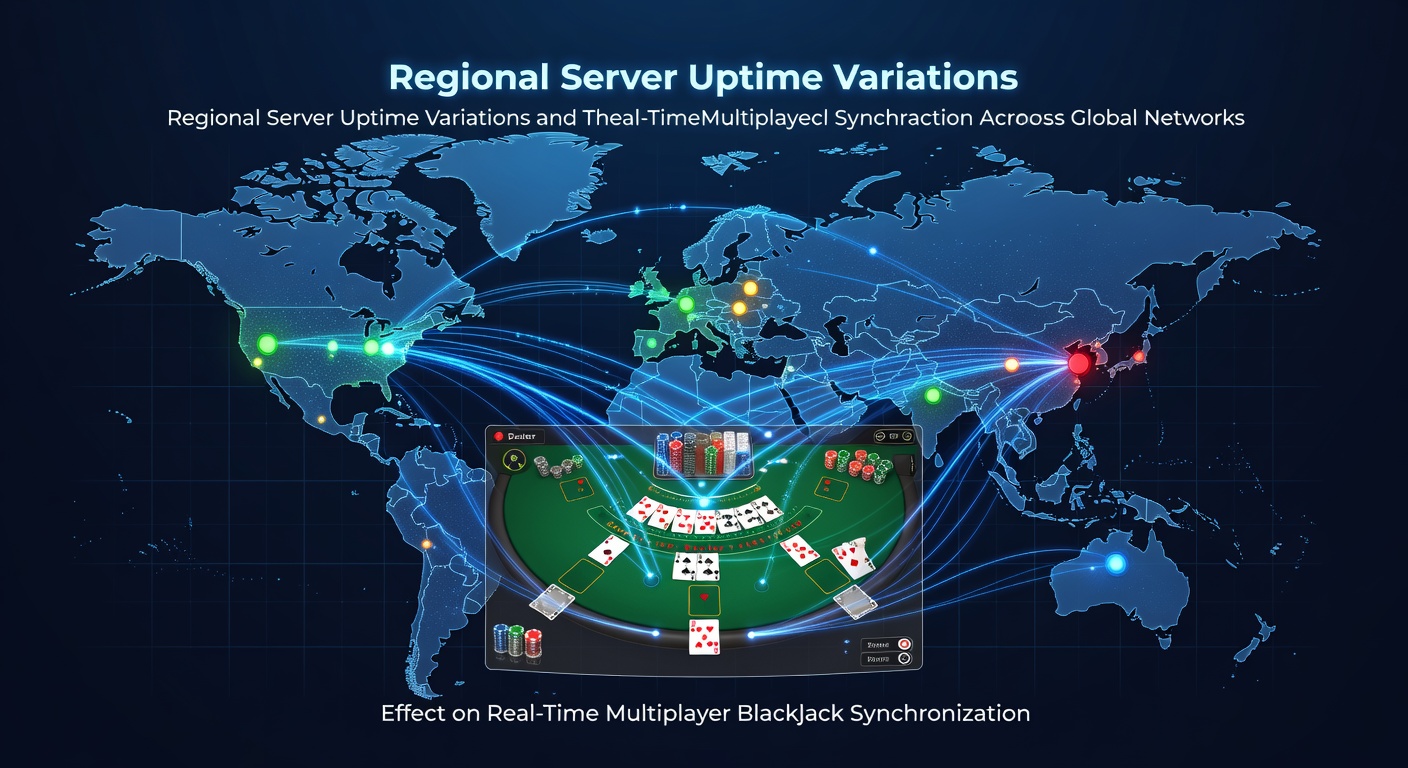
Server uptime patterns differ sharply across regions because infrastructure investments, power grid reliability, and regulatory oversight create distinct operational baselines, and these differences directly shape how real-time multiplayer blackjack maintains synchronized gameplay for participants on separate continents.
Infrastructure Realities Behind Regional Uptime Gaps
Data centers in North America and parts of Europe report average uptime figures above 99.95 percent according to industry monitoring from the first quarter of 2026, whereas facilities in Southeast Asia and Latin America often sit between 99.7 and 99.85 percent due to more frequent maintenance windows and occasional grid instability. Those variations matter because blackjack synchronization requires sub-100 millisecond response windows for card distribution, bet confirmation, and result display to reach every connected player at essentially the same moment.
Observers note that operators route traffic through regional hubs chosen for both latency and uptime guarantees, yet when a hub in one time zone experiences even brief degradation, the ripple reaches sessions that span multiple hubs. In May 2026 several platforms adjusted routing tables after a documented 14-minute dip in one Australian node affected tables that also drew players from North American servers.
How Uptime Fluctuations Disrupt Blackjack Timing
Real-time blackjack relies on a central game engine that pushes state updates to every client, and any delay in one regional server forces the engine to either buffer other players or drop late packets. Research indicates that when uptime falls below 99.9 percent for more than two consecutive minutes, desynchronization events rise by measurable margins, particularly when three or more regions participate in the same table.
Packet loss during these windows produces visible effects such as cards appearing out of sequence, bets registering after the deal has begun, or results displaying differently for subsets of players. Those who've examined session logs from cross-border tables describe situations where one player sees a hit card while another still waits on the previous action, breaking the shared reality the game depends upon.
Geographic Examples from 2026 Operations
Platforms operating tables that mix European and Asian players recorded higher synchronization complaints during periods when European nodes entered scheduled maintenance, whereas purely intra-regional tables showed fewer issues. One study released in April 2026 tracked 1.2 million hands across 14 countries and found that sessions spanning four or more regions experienced 2.3 times the average number of timing mismatches compared with two-region sessions.
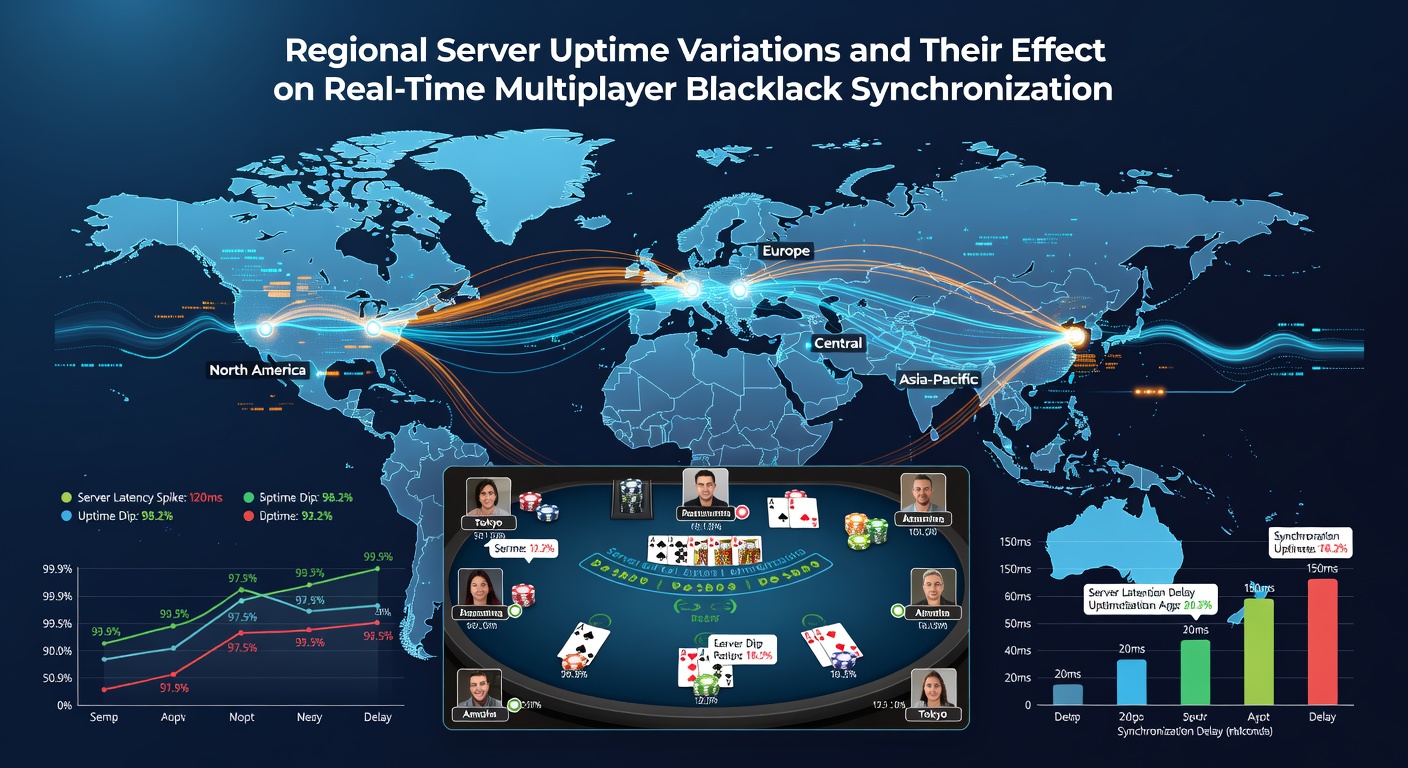
Network engineers at several operators now maintain separate failover clusters for high-traffic blackjack corridors, yet the cost of keeping identical capacity in every region remains a limiting factor. Data from the International Association of Gaming Regulators shows that operators in jurisdictions with stricter uptime mandates invest more heavily in redundant power and cooling systems, producing measurable but uneven improvements.
Technical Approaches to Maintaining Synchronization
Developers deploy predictive buffering and client-side reconciliation algorithms that attempt to smooth over brief server gaps, yet these tools reach their limit when regional uptime differences exceed roughly 300 milliseconds of cumulative drift. Studies from university network labs indicate that combining edge computing nodes closer to player clusters with centralized authoritative servers reduces the window during which desync can occur, although complete elimination remains elusive across truly global player bases.
Operators also adjust table configurations dynamically, closing cross-region tables during periods when one participating region shows elevated maintenance risk. In May 2026 several major platforms adopted automated rules that reroute new players to intra-regional tables when any linked server reports uptime below its 30-day rolling average.
Regulatory and Industry Responses
Regulators in multiple jurisdictions now request uptime and latency reports as part of ongoing compliance reviews, and some tie licensing conditions to demonstrated synchronization performance across borders. The Canadian Gaming Regulators Association published updated technical standards in early 2026 that explicitly reference maximum allowable state drift for live dealer products, prompting operators to accelerate investments in monitoring dashboards that track every region simultaneously.
Industry groups have begun sharing anonymized synchronization incident data so that patterns become visible faster, allowing collective adjustments rather than isolated troubleshooting. Those patterns reveal that the most persistent problems occur not during outright outages but during partial degradations that affect only some players on a table.
Conclusion
Regional server uptime variations continue to influence real-time multiplayer blackjack synchronization because the technical demands of simultaneous state updates leave little margin for infrastructure differences. As platforms expand player pools across more time zones, the pressure on consistent uptime rises, and operators respond with routing changes, failover clusters, and closer regulatory coordination. The record through May 2026 shows measurable progress on intra-regional tables, yet fully global sessions still encounter timing friction whenever any single region experiences even short-term instability. Continued refinement of both hardware redundancy and software reconciliation methods will determine how cleanly these games scale across worldwide networks in the years ahead.