19 Aug 2026
How Notification Cadence in Mobile Casino Apps Shapes Deposit Timing and Session Restarts Across Time Zones
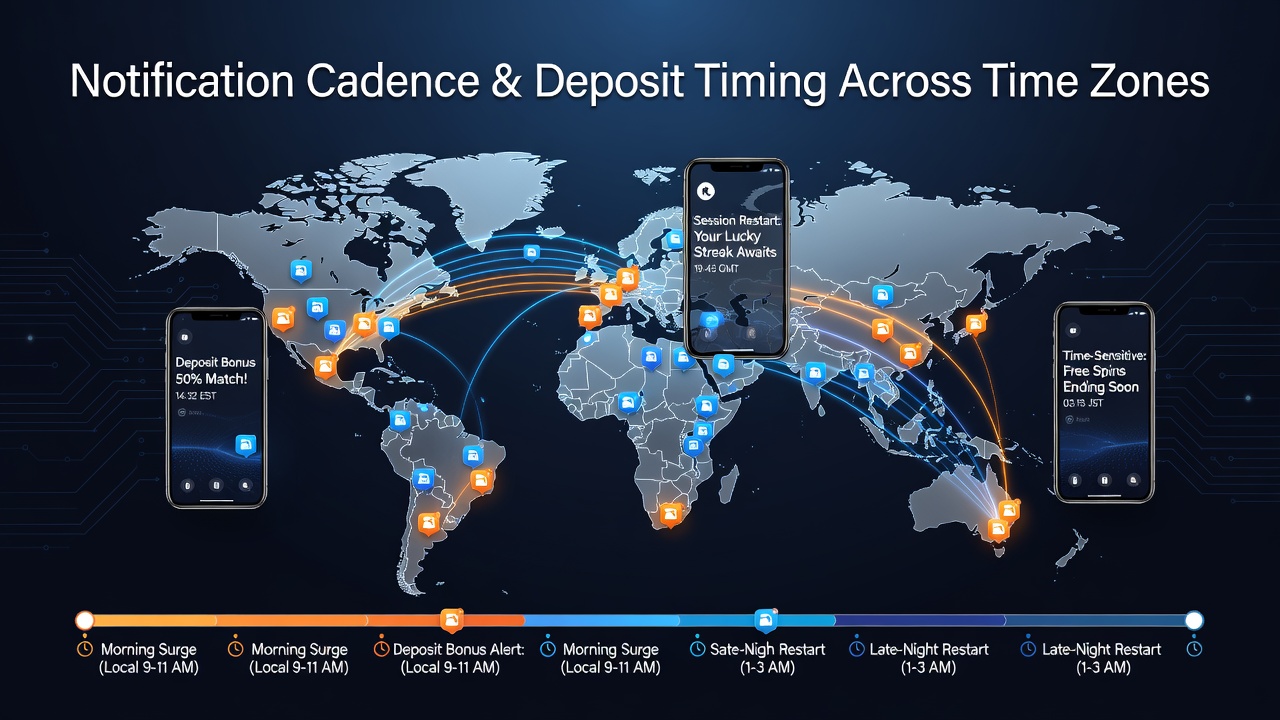
Data from mobile gaming platforms indicates that notification cadence directly influences when users complete deposits and restart sessions, particularly when apps serve players spread across multiple time zones. Platforms schedule push alerts in sequences that align with peak activity windows in key regions, which creates measurable shifts in funding patterns and session length according to aggregated user logs.
Core Elements of Notification Cadence
Notification cadence refers to the frequency, timing, and sequencing of alerts sent through mobile casino applications, and researchers have tracked how these patterns interact with user behavior in real time. Apps often deploy initial reminders during local evening hours while layering follow-up messages at intervals that account for travel across zones, which produces staggered deposit spikes visible in backend analytics. Observers note that shorter intervals between alerts tend to accelerate session restarts among users in overlapping time zones, whereas longer gaps allow natural drop-off before the next prompt arrives.
Studies of global app data show that cadence adjustments made in response to regional activity peaks alter deposit timing by several hours on average. For instance, a sequence timed for Asia-Pacific users in the morning can trigger North American deposits later the same calendar day because the alerts cross the international date line and land during evening leisure periods there.
Deposit Timing Patterns Across Regions
Deposit records compiled from multi-zone platforms reveal consistent correlations between alert delivery and funding events, with peaks occurring within 30 to 90 minutes after notification receipt in most tracked cohorts. Those who receive alerts during their local afternoon hours complete deposits at higher rates than users who receive the same message during overnight periods, and this difference persists even after controlling for overall app engagement levels. Reports from the Nevada Gaming Control Board highlight similar timing shifts in regulated mobile offerings, where cadence changes produced measurable redistribution of deposit volume across Pacific and Mountain time zones.
Platforms that stagger notifications by 15-minute increments across time zones record smoother distribution of deposits throughout the 24-hour cycle, which reduces server load concentration and extends individual session durations. Data indicates that users in Europe who receive alerts synchronized to Eastern Standard Time often restart sessions during their own late evening, creating a secondary wave of activity that feeds back into the original cadence loop.
Session Restart Dynamics and Time Zone Effects
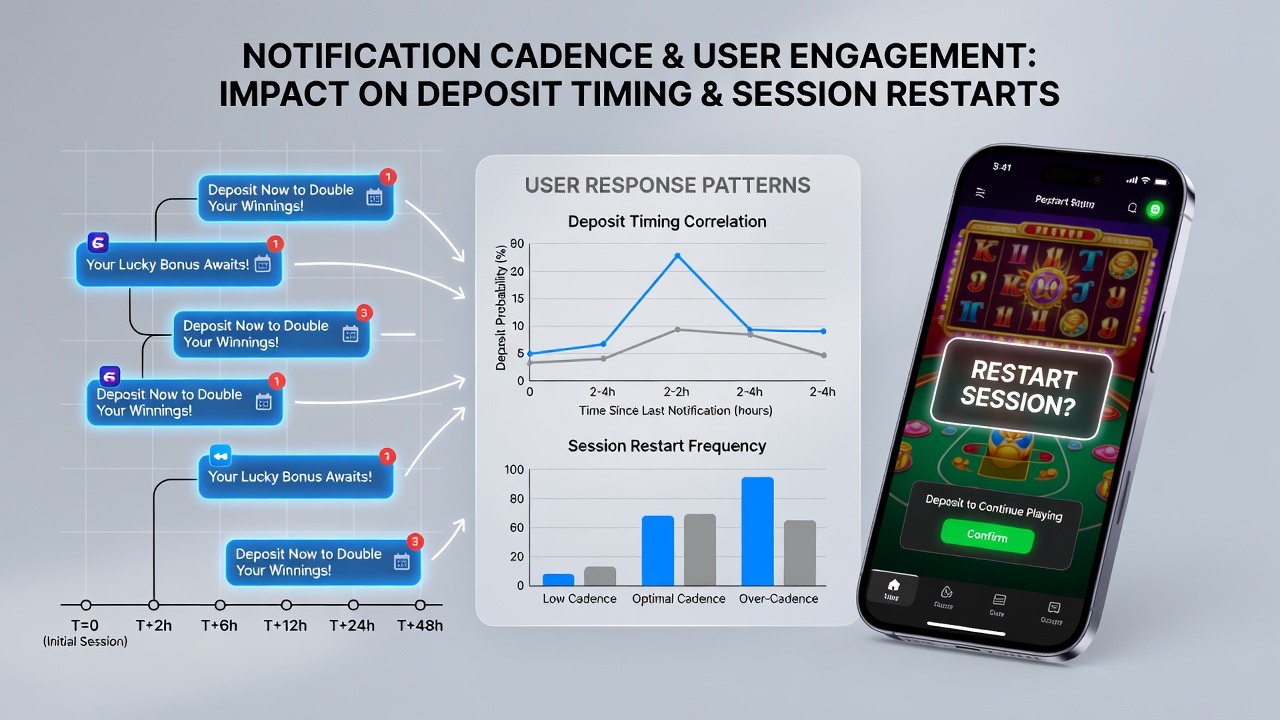
Session restarts occur when users return to an app after a period of inactivity, and notification cadence modulates the length of these gaps in predictable ways according to cross-zone telemetry. Shorter cadence cycles compress restart intervals for players whose local time aligns with the alert window, while longer cycles allow deeper breaks that sometimes span full sleep periods in distant regions. Analysts have observed that a single well-timed notification sent during August 2026 testing windows produced restart clusters that propagated westward at roughly the speed of the relevant time zone offset, generating deposit activity 12 to 18 hours after the initial send.
Evidence from platform telemetry further shows that users located near the International Date Line experience the most pronounced effects because a notification delivered on one calendar day can land on the previous day for recipients on the opposite side. This temporal displacement leads to restart patterns that appear offset when viewed on a universal timeline, yet align perfectly with each user's local leisure schedule. Those who study these flows find that cadence tuned to multiple overlapping zones reduces the likelihood of clustered restarts and spreads deposit events more evenly across daylight hours in each region.
Observed Interactions With User Behavior
Behavioral datasets collected from aggregated mobile casino traffic demonstrate that notification sequences incorporating both push and in-app triggers generate higher restart rates than single-channel approaches, particularly when the second alert arrives within the same local evening block. Users who receive reminders during commute windows in one zone often complete deposits upon reaching home in another zone, which extends the effective session window beyond what single-time-zone models predict. Research compiled by the Australian Gambling Research Centre documents comparable patterns in cross-hemisphere user groups, where cadence adjustments shifted deposit timing by up to four hours relative to baseline measurements.
Platforms that monitor real-time engagement across zones can refine cadence parameters to match observed deposit windows, and this iterative tuning produces incremental gains in session continuity without requiring changes to game content or bonus structures. The resulting data loops allow operators to identify when a notification sent in one region reliably precedes a deposit cluster in another, creating feedback that further refines delivery schedules over successive weeks.
Conclusion
Notification cadence in mobile casino apps functions as a timing mechanism that shapes both deposit events and session restarts through its interaction with global time zones. Data collected from operational platforms shows measurable redistribution of activity when sequences account for zone offsets, and ongoing refinements continue to alter the daily rhythm of user engagement. Observers tracking these systems expect continued evolution as apps integrate additional regional signals into their delivery logic.